Categories

Explore expert articles and guides on Regulation for Malta property owners. Get insights on short-let management, regulations, and investment strategies.

MTA Short Let Licensing Guide Malta 2026 | Eleva

Every short-let property in Malta must hold a valid MTA Holiday Furnished Premises Licence before accepting a single booking. This applies regardless of the platform β€” Airbnb, Booking.com, or direct β€” and regardless of how many nights per year you rent. There are no exemptions for occasional or seasonal rentals.

What Is an MTA Holiday Furnished Premises Licence?

The MTA Holiday Furnished Premises Licence is issued by the Malta Tourism Authority and certifies that a property meets minimum standards for short-term tourist accommodation. Standards cover fire safety, electrical installation, furnishing quality, emergency signage, and habitability.

The licence is property-specific β€” not owner-specific or agency-specific. Each individual unit requires its own application, inspection, and fee. If you own three apartments and wish to rent all three, you need three separate licences.

Who Applies for the Licence?

The licence is held by the property owner. If a management company handles the property, the owner remains the licence holder. Eleva prepares and manages the full application as a service β€” owners simply provide the required documents and sign where needed.

Documents Required

The following documents are required for a standard application:

  • Valid ID of the applicant (ID card or passport)
  • Proof of ownership (deed of sale or title document) or a signed lease contract
  • Written owner consent if the applicant is not the registered property owner
  • Third-party liability insurance with a minimum coverage of €250,000
  • Building permits and compliance evidence
  • Perit (architect) declaration confirming the property’s structural conformity and habitability
  • If applying as a company: Memorandum and Articles of Association plus a board resolution

Missing documents pause the vetting clock. Eleva coordinates with a certified Perit and prepares the full application package to avoid delays.

The Application Process Step by Step

  1. Online application submitted via the MTA portal with all supporting documents.
  2. Initial vetting β€” 5 working days: The MTA reviews documents. If anything is incomplete, the clock pauses until resolved.
  3. Property inspection: An MTA inspector visits the property to assess compliance. The property must be fully furnished and ready for guests.
  4. Final approval β€” 10 working days after a positive inspection.

Realistic total timeline: 4–6 weeks from initial submission to licence in hand, assuming documents are complete and the property passes inspection first time.

How Much Does an MTA Licence Cost?

The current MTA licence fee is approximately:

  • €130 per unit for properties in Malta
  • €104 per unit for properties in Gozo

These fees are paid directly to the MTA and are separate from any management company charges.

Post-Licence Obligations

Receiving your MTA licence is not the end. Licensed operators have ongoing obligations:

  • Display the licence number on all listings β€” Airbnb, Booking.com, and every other platform. From May 2026, platforms are legally required to verify registration numbers.
  • Physical notice at the property showing the MTA licence number and a 24/7 emergency contact.
  • Notify the building administrator if the property is in a condominium.
  • Maintain a waste collection management plan.
  • VAT and fiscal receipt compliance for all rental income.
  • Eco-Tax collection β€” €0.50 per adult per night collected from guests and remitted to authorities.

The 2026 Regulatory Changes

Legal Notice 92 of 2026 introduced the most significant overhaul of Malta’s short-let regulations in recent years:

  • Booking platforms must now verify MTA licence numbers for all Malta listings and share monthly activity data with Maltese authorities.
  • Unlicensed operators face 3-year disqualification from obtaining an MTA licence, plus financial penalties.
  • Stricter enforcement of the physical notice requirement at properties.

How Eleva Manages Licensing for Property Owners

Eleva handles the entire MTA licence process: document preparation, Perit coordination, MTA portal submission, inspection management, and approval tracking. Ongoing compliance β€” licence number display, Eco-Tax remittance, and renewal management β€” is included in the standard service. No Eleva-managed property has ever faced a compliance action.

Frequently Asked Questions

Can I rent my property while the licence application is pending?

No. You must hold a valid licence before accepting any bookings. Platforms now verify licence numbers, so unlicensed properties are at risk of removal.

Does the MTA licence need to be renewed?

Yes, the licence requires periodic renewal. Eleva manages renewal processes for all properties in its portfolio.

What if my property fails the MTA inspection?

The MTA issues a list of required remediation works. Once completed, a re-inspection is scheduled. Eleva prepares properties thoroughly before the initial inspection to minimise failure risk.

LEARN MORE
Category:
Regulation
Explore expert articles and guides on Regulation for Malta property owners. Get insights on short-let management, regulations, and investment strategies.

Malta Short Let Regulations 2026 | Eleva

Malta’s short-term rental market entered a new regulatory era in May 2026. Legal Notice 92 of 2026 β€” the most comprehensive overhaul of short-let rules in the country’s history β€” introduced mandatory platform verification, stricter penalty enforcement, and new operator obligations that affect every property owner renting on Airbnb, Booking.com, or any other platform.

What Is Legal Notice 92 of 2026?

Published by the Maltese Government in May 2026, Legal Notice 92 introduced a package of regulatory changes targeting the short-term rental sector. The core changes are:

  • Platform verification mandate: Booking platforms including Airbnb and Booking.com are legally required to verify the MTA licence number for every Malta listing before it can remain active.
  • Mandatory data sharing: Platforms must share monthly activity data β€” nights booked, revenue generated, property details β€” with Maltese authorities.
  • 3-year disqualification: Operating without a valid MTA licence can result in a 3-year ban from obtaining one, in addition to financial penalties.
  • Stricter on-property signage enforcement: Physical notice displaying the MTA licence number and a 24/7 emergency contact is now actively enforced.

Who Is Affected?

Every property owner in Malta renting accommodation to tourists is subject to MTA licensing requirements. This includes:

  • Apartments, studios, and townhouses listed on Airbnb or Booking.com
  • Gozo farmhouses and villas
  • Properties rented directly to tourists without a platform
  • Properties managed by a third-party company

There are no exemptions based on the number of nights rented per year, property size, or whether the owner occupies the property part-time.

What Changed Under Legal Notice 92?

The MTA Holiday Furnished Premises Licence has been required since the introduction of short-let regulations. What Legal Notice 92 changed is enforcement:

  • Previously, platforms were not required to verify licence numbers β€” an unlicensed property could remain listed.
  • From May 2026, platforms must actively verify licence numbers and can delist properties that fail to provide one.
  • The penalty for operating without a licence escalated from financial fines to a 3-year disqualification from obtaining a licence.

A 3-year disqualification is effectively a death sentence for a short-let income strategy. Your property cannot legally generate tourist rental income for three years, and any income earned during that period remains at legal risk.

What You Must Do Immediately

If your property is currently listed on Airbnb or Booking.com, you must:

  1. Add your MTA licence number to your listing. On Airbnb, this is in Listing Settings under Regulations. On Booking.com, it is in Property Policies.
  2. Ensure your licence is current and not expired. Licences require periodic renewal β€” check your MTA correspondence for renewal dates.
  3. Display the licence number at the property on a visible physical notice, along with a 24/7 emergency contact number.

If you do not yet have an MTA licence, you must suspend bookings until the licence is obtained. Continuing to accept bookings without a licence now carries significantly higher risk than before Legal Notice 92.

Eco-Tax: What Is Required

The Malta Eco-Contribution is a separate requirement from the MTA licence. Hosts must collect €0.50 per adult per night from guests and remit it to the Malta Tourism Authority. This applies to all nights booked regardless of the booking platform.

Failure to collect and remit Eco-Tax is a separate compliance violation. Eleva collects and remits Eco-Tax on behalf of all managed properties as part of the standard service.

Tax Obligations for Short-Let Income

Short-let income earned by individual property owners in Malta is subject to a 15% final withholding tax. This flat rate is applied to gross rental income before management fees. It is final β€” no additional income tax is due on this income if the withholding is applied correctly.

Companies and non-resident owners may be subject to different tax treatment. Consult a Malta-based tax adviser for your specific situation.

Condominium Rules

Legal Notice 92 reinforced the requirement for operators in blocks of flats or condominiums to notify the building administrator. Some condominium rules may restrict or prohibit short-let activity β€” owners must check their deed of acquisition and building regulations before listing.

How Eleva Ensures Full Compliance

Eleva manages regulatory compliance for all properties in its portfolio. This includes MTA licence application and renewal, licence number display on all platform listings, on-property notice installation, Eco-Tax collection and remittance, VAT and fiscal receipt compliance, and monitoring of regulatory changes as they are published.

No Eleva-managed property has faced a compliance action. All managed properties held valid MTA licences before the Legal Notice 92 enforcement deadline.

Frequently Asked Questions

What happens if Airbnb removes my listing for not having an MTA licence?

You would need to obtain the MTA licence before relisting. The timeline is 4–6 weeks assuming documents are in order. During this period, you cannot accept bookings on the platform. Eleva can manage the application process urgently for affected owners.

I have a property in Gozo β€” do the same rules apply?

Yes. Legal Notice 92 applies to all short-let properties across Malta and Gozo. The MTA licence fee for Gozo properties is €104 per unit versus €130 in Malta, but the requirements are identical.

Can I rent my property on a private website without an MTA licence?

No. The MTA licence requirement applies regardless of the booking method. Direct bookings, private websites, and social media lettings are all subject to the same licensing requirements.

What is the Eco-Tax and who pays it?

The Eco-Tax is €0.50 per adult per night, charged to the guest rather than the owner. It must be collected on every stay and remitted to the MTA. Eleva handles this automatically for all managed properties.

LEARN MORE
Category:
Regulation
Explore expert articles and guides on Regulation for Malta property owners. Get insights on short-let management, regulations, and investment strategies.

VAT & Eco Contribution Malta 2026 | Eleva

VAT on Malta Short-Let Rentals: Who Actually Needs to Register?

Malta's VAT rules for short-let accommodation confuse many property owners β€” and the confusion is costly. The 15% flat income tax is widely understood, but VAT and the Eco-Contribution sit in a separate regulatory layer that applies regardless of how your income tax is handled.

Is Short-Let Income Subject to VAT?

Yes. Under Maltese VAT law, short-term accommodation (stays under 30 days) constitutes a taxable supply. This means the accommodation service you provide to guests carries VAT implications β€” entirely distinct from long-term residential rental, which is VAT-exempt.

The VAT Registration Threshold

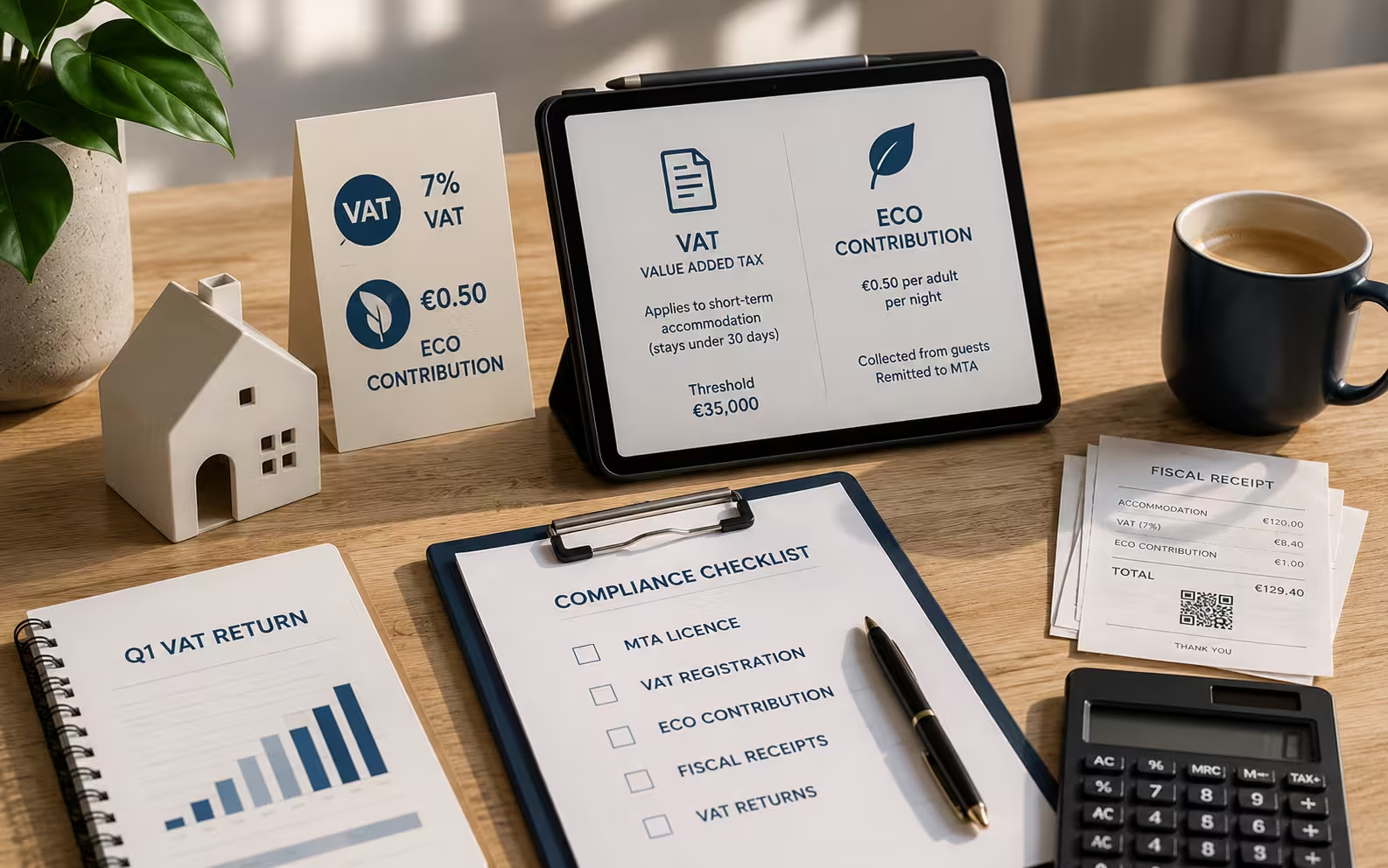
You are required to register for VAT in Malta once your annual taxable turnover exceeds €35,000. This threshold applies to gross short-let income β€” not the net amount after platform fees or management fees.

If you have other VAT-taxable business income, this is aggregated with your short-let income when calculating whether you've crossed the threshold.

What Happens Once You Cross the Threshold?

After registering:

  • You must charge 7% VAT on accommodation services provided to guests
  • You must issue a fiscal receipt for every booking
  • You must file periodic VAT returns (quarterly or monthly depending on turnover)
  • You can reclaim input VAT on allowable business expenses β€” furniture, professional services, renovations

Does Airbnb Handle VAT for Me?

Partially. Since 2022, Airbnb collects and remits VAT on its own service fee directly. However, the accommodation element β€” the actual nightly charge going to the host β€” remains the owner's responsibility for VAT compliance. The platform collecting money on your behalf does not discharge your own VAT registration obligation once you exceed the €35,000 threshold.

The Eco-Contribution: A Separate Obligation

The Malta Eco-Contribution is entirely separate from VAT and income tax. Under the Eco-Contribution Act, all tourist accommodation providers must collect €0.50 per adult per night from guests and remit this to the Malta Tourism Authority.

Key Eco-Contribution facts:

  • Applies to every booking, regardless of platform
  • Must be collected from the guest β€” it cannot be absorbed by the host as an operating cost
  • Remittance is typically quarterly β€” confirm current MTA schedules
  • Failure to collect and remit is a separate compliance violation from MTA licensing failures

How the Numbers Stack Up

On a typical week's booking β€” 2 adults, 7 nights, at €120/night:

  • Gross booking value: €840
  • Eco-Contribution collected from guests: €7.00 (2 Γ— 7 Γ— €0.50)
  • If VAT-registered: 7% VAT on accommodation = €58.80 remitted to tax authority

What If You're Below the €35,000 VAT Threshold?

If your annual short-let income is below €35,000, you are not required to register for VAT or charge guests VAT. You may still voluntarily register if you have significant reclaimable input VAT β€” for example, following a major property renovation or fit-out. The Eco-Contribution applies regardless of your VAT status; there is no minimum threshold for the eco-tax.

How Eleva Handles This for Managed Properties

Eleva collects the Eco-Contribution automatically from guests on every booking and remits it to the MTA on behalf of all managed properties. For properties where VAT registration is required, we provide full gross income statements to your accountant and advise on the registration process. No Eleva-managed property has ever faced a compliance action on either Eco-Contribution or VAT grounds.

Get in touch if you're unsure about your VAT or Eco-Contribution position.

LEARN MORE
Category:
Regulation
Explore expert articles and guides on Regulation for Malta property owners. Get insights on short-let management, regulations, and investment strategies.

Malta Short Let Tax Guide 2026 | Eleva

Short-Let Rental Tax in Malta: What Property Owners Need to Know in 2026

If you're earning income from Airbnb, Booking.com, or any short-let rental in Malta, you have a tax obligation. The good news: Malta's tax framework for rental income is relatively straightforward, and there are legitimate ways to minimise your liability.

The 15% Flat Tax Option

Malta offers property owners a highly attractive flat tax rate of 15% on gross rental income. This is a final withholding tax β€” meaning you don't need to declare the rental income in your standard income tax return if you elect this option.

Key points:

  • The 15% rate applies to the gross rent received, before any deductions
  • It is optional β€” you can instead declare rental income as part of your general income and be taxed at your marginal rate (up to 35%)
  • For most property owners, the 15% flat rate is significantly more advantageous
  • You must submit a separate rental income tax return (Form RRT) by 30 June each year

Short-Let vs Long-Let: Same Tax Treatment?

Yes. The 15% flat rate applies to both long-term residential rentals and short-term holiday rentals (Airbnb, Booking.com, etc.).

VAT on Short-Let Rental Income

Short-term accommodation (stays under 30 days) is considered a taxable supply for VAT purposes. If your annual short-let income exceeds the VAT registration threshold (currently €35,000), you are required to register for VAT and charge 7% VAT on accommodation services.

Practical points:

  • Airbnb and Booking.com typically handle VAT collection from guests in Malta automatically
  • You may still have filing obligations β€” confirm with your accountant
  • Properties managed via Eleva Malta benefit from guidance on VAT compliance as part of the service

MTA Licensing and Tax

Since the Malta Tourism Authority introduced mandatory Holiday Furnished Premises Licences, all licensed short-let properties are effectively registered with the government. Undeclared short-let income is increasingly difficult to conceal β€” and the penalties for non-compliance are significant.

Deductible Expenses (If Using Marginal Rate)

If you opt out of the 15% flat rate and declare at your marginal rate, you can deduct legitimate expenses including: management fees, repairs and maintenance, insurance, utilities (if borne by the owner), and depreciation.

However, for most owners, the flat 15% rate still results in a lower overall tax burden.

Non-Resident Property Owners

If you own property in Malta but are not a Maltese tax resident, rental income sourced in Malta is still taxable in Malta. The 15% flat rate is available to non-residents as well. Double tax treaty provisions may affect your position in your country of residence.

Key Dates for 2026

  • 30 June 2026: Deadline for Form RRT (rental income tax return for 2025 income)

For property owners using Eleva Malta's management service, we provide a full annual income summary to simplify your tax filing. Get in touch to learn more.

LEARN MORE
Category:
Regulation
Explore expert articles and guides on Regulation for Malta property owners. Get insights on short-let management, regulations, and investment strategies.

Holiday Let Malta 2026: Owner's Complete Guide | Eleva

A holiday let in Malta is a privately owned property rented to tourists or short-stay guests β€” typically through Airbnb, Booking.com, VRBO, or Expedia. Under Maltese law, any property let for periods under six months to holiday visitors falls under the Holiday Furnished Premises (HFP) licence category, regulated by the Malta Tourism Authority (MTA).

Since 2020, all Malta holiday lets must hold a valid MTA HFP licence. As of 2026, enforcement has significantly intensified β€” unlicensed operators face fines of up to €5,000 and mandatory removal from rental platforms. Airbnb and Booking.com now require a valid MTA licence number before activating new listings.

MTA Holiday Let Licence: What You Need in 2026

To legally operate a holiday let in Malta, every individual property requires its own MTA Holiday Furnished Premises licence. Here is what the process involves:

  • Application: Submitted by the property owner directly via the MTA online portal
  • Inspection: Physical visit by an MTA inspector to verify safety standards and amenity compliance
  • Annual fee: €100–€250 depending on property classification and size
  • Renewal deadline: 30 June each year β€” licences lapse automatically if not renewed
  • 2026 additions: Energy Performance Certificate (EPC) now required at application; eco-contribution collection is mandatory on every booking

Eleva Malta manages the entire MTA licence process for all owner clients β€” from initial application through annual renewal β€” at no extra charge beyond the standard management agreement.

Holiday Let Malta: Income by Area (2026 Data)

Malta's short-stay rental market is one of Europe's most consistent performers, driven by 3.5 million annual tourist arrivals and a near year-round season. Here is what holiday let owners are realistically earning in 2026:

  • Sliema: €1,800–€3,500/month net (1-bed), 80–88% average occupancy, ADR €130–€165
  • St. Julian's / Paceville: €2,000–€4,200/month net (1-bed), 82–90% occupancy, ADR €145–€195
  • Valletta: €2,200–€5,000/month net (1-bed), 76–85% occupancy, ADR €155–€220
  • Gzira: €1,500–€2,800/month net (1-bed), 75–82% occupancy, ADR €95–€135
  • Mellieha: €1,600–€3,200/month net (1-bed), peak season June–September, ADR €150–€280

These figures represent net owner income after the Eleva management fee (30% of revenue, net of OTA commissions). Gross income is typically 40–55% higher before management costs.

Holiday Let vs Long-Term Rental in Malta

The numbers consistently favour short-let over traditional long-term rentals in Malta:

  • Long-term 1-bed rental in Sliema: approximately €1,100–€1,400/month
  • Managed holiday let 1-bed in Sliema: €1,800–€3,500/month net
  • Difference: significantly more income from holiday letting

Beyond income, holiday lets offer greater flexibility. You retain the right to use the property yourself, you are not locked into tenancy agreements, and you can exit the short-let market at any time without serving notice periods.

Tax on Holiday Lets in Malta

Malta's tax treatment of holiday let income is favourable compared to most EU countries:

  • Flat rate option: 15% final withholding tax on gross rental income β€” the most popular choice for Malta holiday let owners
  • Standard income tax: Alternatively, declare rental income as general income (rates 0–35% depending on total income)
  • VAT: Properties earning under €20,000/year are VAT-exempt; above this threshold, 7% tourism-rate VAT applies
  • Eco-contribution: €0.50 per guest per night, collected from guests at booking and remitted quarterly to the government

Eleva Malta provides full income reporting for tax purposes, including monthly owner statements and annual summaries ready for your accountant.

How Eleva Malta Manages Holiday Lets

Our fully hands-off holiday let management service in Malta covers every aspect of the short-let operation:

  • MTA HFP licence application and annual renewal management
  • Professional photography and listing creation across Airbnb, Booking.com, VRBO, and Expedia
  • AI-powered dynamic pricing updated daily based on local demand, events, and competitor data
  • Guest communication: enquiries, bookings, check-in coordination, checkout, and review management
  • Professional cleaning and hotel-quality linen changeover after every guest stay
  • Maintenance coordination and regular property inspections
  • Owner portal with real-time revenue and occupancy tracking

Our fee: 30% of rental revenue, net of OTA platform fees. No setup fees. No hidden charges. No lock-in contracts.

Start Your Malta Holiday Let with Eleva

Whether you are converting a long-term rental to holiday let or launching a brand-new investment property, Eleva Malta handles everything from day one. Request a free revenue estimate and we will show you exactly what your property could earn as a fully managed holiday let in Malta.

LEARN MORE
Category:
Regulation