
Market Report 2026/2027
How Much Can You Earn on Airbnb in Malta in 2026?
A comprehensive breakdown of nightly rates, occupancy trends, and neighborhood performance across the Maltese islands.
Read Full AnalysisGuides on Airbnb income, MTA licensing, short-let regulations, tax, ROI and property management in Malta.
A comprehensive breakdown of nightly rates, occupancy trends, and neighborhood performance across the Maltese islands.
Read Full Analysis
Property Management
Malta’s shortlet market has matured significantly since 2020. For property owners, choosing a management company is no longer just a question of finding someone to list the property on Airbnb. The right provider can influence revenue, guest reviews, compliance, maintenance standards, and the long-term value of the asset.
The challenge is that many shortlet management companies use similar language: “full management”, “dynamic pricing”, “guest support”, and “stress-free income”. On the surface, they can sound almost identical. In practice, the differences can be substantial.
This comparison looks at some of the main shortlet management companies operating in Malta in 2026. It is based on publicly available information from company websites, booking platform profiles, and online reviews. It is not a sponsored ranking, not a paid promotion, and the companies are listed in no particular order.
A strong comparison should go beyond the headline management fee. A company charging a lower percentage may still be more expensive if the fee is calculated on gross revenue or if important services are billed separately. A company charging a higher percentage may be more transparent if the fee is calculated net of OTA commissions and includes more operational support.
The percentage matters less than the base. A fee calculated on gross booking revenue is not the same as a fee calculated after Airbnb or Booking.com commissions.
Some providers publish their fee structure. Others require a quote. Private pricing is not necessarily negative, but owners should ask for a clear breakdown.
Guest messaging is only one part of management. Cleaning, maintenance, inspections, check-in issues, and emergencies require reliable local operations.
In Malta, a serious shortlet manager should be able to explain MTA licensing, VAT considerations, eco-contribution, and owner reporting clearly.
The grid below is more useful than a simple fee list because it compares how each provider appears to position itself in the market.
Below is a more detailed breakdown of each company’s visible positioning, public fee information, and what owners should pay attention to before signing.
Eleva Malta positions itself as a modern shortlet and property management company for Malta owners who want transparency, technology, and clear reporting.
PropertyManager.com.mt appears to be one of the more established names in Malta and Gozo property management, with a large portfolio and long market presence stated on its website.
Short Stayz Malta focuses on shortlet management across Malta, with services including photography, guest support, MTA licensing assistance, and listing distribution.
Beyond Stay publishes a lower management percentage than many competitors and focuses on vacation rental management in popular Malta areas.
Christiano Property Management presents itself as a premium short-let management provider with luxury hotel management experience.
ELDI Management positions itself as a full-service property management provider with a stress-free approach for owners.
Buena Vista Property Management has been operating in Malta since 2008 and offers short-let, long-let, and key holding services.
Easy Landlord Malta focuses on short lets, Airbnb, and Booking.com management with daily dynamic pricing and multi-channel distribution.
Victor Estate offers short-let management in Malta, including full management and partnership options for owners.
MelaProperty provides Airbnb management services in Malta and Gozo, with end-to-end support for different types of properties.
A realistic comparison depends on the owner’s objective. A hands-off investor, a Gozo farmhouse owner, a luxury apartment owner, and a landlord testing short lets for the first time may not need the same type of management company.
Suitable for owners who want a clear fee structure, modern systems, net-of-OTA pricing logic, and a more analytical revenue approach.
Suitable for owners who value market presence, portfolio size, and an established Malta and Gozo management setup.
Suitable for owners comparing low published management percentages, provided the full cost structure is checked carefully.
Suitable for owners of higher-end properties who may prioritise hospitality standards and service quality.
Suitable for owners who want broader property management support, not only Airbnb revenue optimisation.
Suitable for owners who want multi-channel exposure and dynamic pricing, after checking reporting and fee details.
Owners often compare management companies by looking only at the percentage. This can be misleading. A 13% fee, a 30% fee, and a “from 10%” fee are not automatically comparable unless the owner understands the calculation base and what is included.
Before signing, owners should ask whether the fee is calculated on gross guest payments, net booking revenue, or revenue after OTA commissions. They should also ask whether guest-paid cleaning fees are included in the management fee calculation.
Before choosing a shortlet management company, verify the claims directly. A professional provider should be able to show how they work, what they charge, and what kind of reporting the owner receives.
Check Airbnb, Booking.com, and Google reviews to understand real guest and owner feedback.
Ask how many active properties they manage and request examples similar to your property.
Request a sample monthly owner statement before signing.
Ask whether the fee is calculated on gross revenue or net of OTA commissions.
Ask how they handle MTA licensing, VAT, eco-contribution, and compliance tasks.
Check the contract length, cancellation policy, notice period, and any exit fees.
These questions help expose the real difference between a professional management company and a provider that only looks good on paper.
Malta has several serious shortlet management companies, but they are not all built for the same type of owner. Some compete on low headline fees. Some compete on long market presence. Some focus on premium service. Others focus on technology, transparency, or full-service property care.
The best approach is to compare providers using the same criteria: fee base, inclusions, local operations, compliance support, reporting quality, contract flexibility, and realistic revenue expectations. Once those points are clear, the right choice becomes much easier.
If you would like to understand what your specific property could earn under different management options, including self-management, Eleva Malta offers a free, no-obligation revenue audit.
Request a Free Revenue AuditThis comparison is based on information available as of June 2026. Company details, fees, service areas, and coverage may have changed since publication. Always verify directly with each provider before making a decision.
Property Management
Malta’s shortlet market has matured significantly since 2020. For property owners, choosing a management company is no longer just a question of finding someone to list the property on Airbnb. The right provider can influence revenue, guest reviews, compliance, maintenance standards, and the long-term value of the asset.
The challenge is that many shortlet management companies use similar language: “full management”, “dynamic pricing”, “guest support”, and “stress-free income”. On the surface, they can sound almost identical. In practice, the differences can be substantial.
This comparison looks at some of the main shortlet management companies operating in Malta in 2026. It is based on publicly available information from company websites, booking platform profiles, and online reviews. It is not a sponsored ranking, not a paid promotion, and the companies are listed in no particular order.
A strong comparison should go beyond the headline management fee. A company charging a lower percentage may still be more expensive if the fee is calculated on gross revenue or if important services are billed separately. A company charging a higher percentage may be more transparent if the fee is calculated net of OTA commissions and includes more operational support.
The percentage matters less than the base. A fee calculated on gross booking revenue is not the same as a fee calculated after Airbnb or Booking.com commissions.
Some providers publish their fee structure. Others require a quote. Private pricing is not necessarily negative, but owners should ask for a clear breakdown.
Guest messaging is only one part of management. Cleaning, maintenance, inspections, check-in issues, and emergencies require reliable local operations.
In Malta, a serious shortlet manager should be able to explain MTA licensing, VAT considerations, eco-contribution, and owner reporting clearly.
The grid below is more useful than a simple fee list because it compares how each provider appears to position itself in the market.
Below is a more detailed breakdown of each company’s visible positioning, public fee information, and what owners should pay attention to before signing.
Eleva Malta positions itself as a modern shortlet and property management company for Malta owners who want transparency, technology, and clear reporting.
PropertyManager.com.mt appears to be one of the more established names in Malta and Gozo property management, with a large portfolio and long market presence stated on its website.
Short Stayz Malta focuses on shortlet management across Malta, with services including photography, guest support, MTA licensing assistance, and listing distribution.
Beyond Stay publishes a lower management percentage than many competitors and focuses on vacation rental management in popular Malta areas.
Christiano Property Management presents itself as a premium short-let management provider with luxury hotel management experience.
ELDI Management positions itself as a full-service property management provider with a stress-free approach for owners.
Buena Vista Property Management has been operating in Malta since 2008 and offers short-let, long-let, and key holding services.
Easy Landlord Malta focuses on short lets, Airbnb, and Booking.com management with daily dynamic pricing and multi-channel distribution.
Victor Estate offers short-let management in Malta, including full management and partnership options for owners.
MelaProperty provides Airbnb management services in Malta and Gozo, with end-to-end support for different types of properties.
A realistic comparison depends on the owner’s objective. A hands-off investor, a Gozo farmhouse owner, a luxury apartment owner, and a landlord testing short lets for the first time may not need the same type of management company.
Suitable for owners who want a clear fee structure, modern systems, net-of-OTA pricing logic, and a more analytical revenue approach.
Suitable for owners who value market presence, portfolio size, and an established Malta and Gozo management setup.
Suitable for owners comparing low published management percentages, provided the full cost structure is checked carefully.
Suitable for owners of higher-end properties who may prioritise hospitality standards and service quality.
Suitable for owners who want broader property management support, not only Airbnb revenue optimisation.
Suitable for owners who want multi-channel exposure and dynamic pricing, after checking reporting and fee details.
Owners often compare management companies by looking only at the percentage. This can be misleading. A 13% fee, a 30% fee, and a “from 10%” fee are not automatically comparable unless the owner understands the calculation base and what is included.
Before signing, owners should ask whether the fee is calculated on gross guest payments, net booking revenue, or revenue after OTA commissions. They should also ask whether guest-paid cleaning fees are included in the management fee calculation.
Before choosing a shortlet management company, verify the claims directly. A professional provider should be able to show how they work, what they charge, and what kind of reporting the owner receives.
Check Airbnb, Booking.com, and Google reviews to understand real guest and owner feedback.
Ask how many active properties they manage and request examples similar to your property.
Request a sample monthly owner statement before signing.
Ask whether the fee is calculated on gross revenue or net of OTA commissions.
Ask how they handle MTA licensing, VAT, eco-contribution, and compliance tasks.
Check the contract length, cancellation policy, notice period, and any exit fees.
These questions help expose the real difference between a professional management company and a provider that only looks good on paper.
Malta has several serious shortlet management companies, but they are not all built for the same type of owner. Some compete on low headline fees. Some compete on long market presence. Some focus on premium service. Others focus on technology, transparency, or full-service property care.
The best approach is to compare providers using the same criteria: fee base, inclusions, local operations, compliance support, reporting quality, contract flexibility, and realistic revenue expectations. Once those points are clear, the right choice becomes much easier.
If you would like to understand what your specific property could earn under different management options, including self-management, Eleva Malta offers a free, no-obligation revenue audit.
Request a Free Revenue AuditThis comparison is based on information available as of June 2026. Company details, fees, service areas, and coverage may have changed since publication. Always verify directly with each provider before making a decision.
Property Management
A low headline percentage can be misleading. Some companies quote a percentage of gross revenue, which means their cut comes straight off the top, before any other costs. Others quote a percentage of net revenue (after platform fees like Airbnb's host service fee).
Take a look at this side-by-side comparison for a property earning €30,000 in gross bookings per year:
It's not a huge difference in this example, but it illustrates why you need to ask what base the percentage applies to.
The management fee isn't your only cost. Here's what typically gets deducted from your rental income before you see a cent:
A company quoting a low management percentage but passing through all the cleaning, linen, and consumable costs separately may end up costing you more than one with a slightly higher, all-inclusive percentage.
Before signing anything, get clear answers to these questions:
A few things should make you pause:
At Eleva, we keep it straightforward: our 30% management fee is calculated net of OTA fees — so you're not paying us a commission on top of a commission. We also pass through guest-paid cleaning fees 100% to the cleaning team, with no markup.
That means the percentage you see is the percentage you get. No hidden onboarding fees, no surprise charges, and a transparent monthly statement you can actually read.
The cheapest management percentage isn't always the cheapest overall. What matters is the net amount that lands in your bank account each month, after every fee, every commission, and every cost. Ask the right questions, compare on a like-for-like basis, and you'll find the right partner for your property.
Want to see what your specific property could earn under Eleva? Request a free revenue audit and we'll model the numbers for you.
Regulation
Malta's VAT rules for short-let accommodation confuse many property owners — and the confusion is costly. The 15% flat income tax is widely understood, but VAT and the Eco-Contribution sit in a separate regulatory layer that applies regardless of how your income tax is handled.
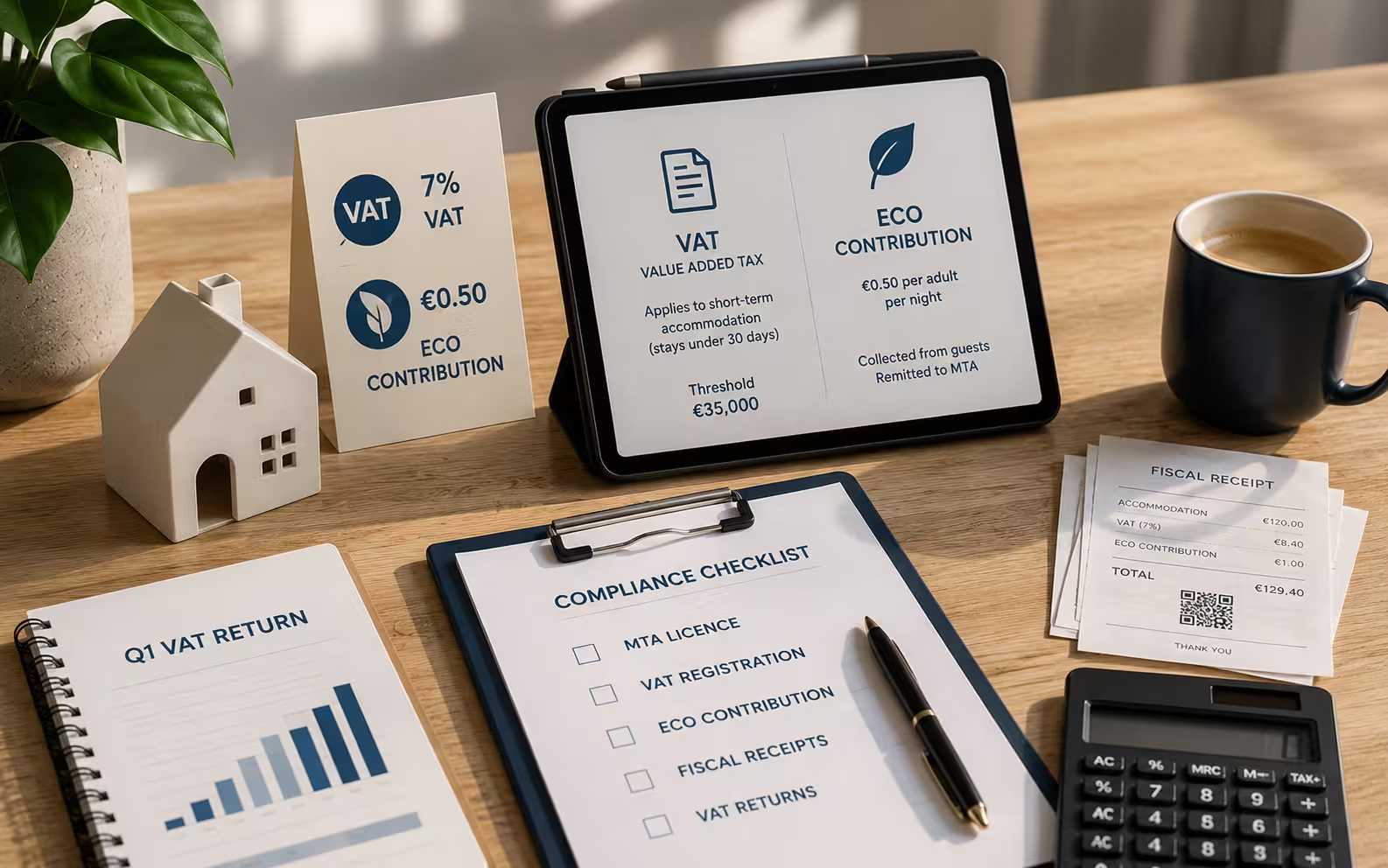
Yes. Under Maltese VAT law, short-term accommodation (stays under 30 days) constitutes a taxable supply. This means the accommodation service you provide to guests carries VAT implications — entirely distinct from long-term residential rental, which is VAT-exempt.
You are required to register for VAT in Malta once your annual taxable turnover exceeds €35,000. This threshold applies to gross short-let income — not the net amount after platform fees or management fees.
If you have other VAT-taxable business income, this is aggregated with your short-let income when calculating whether you've crossed the threshold.
After registering:
Partially. Since 2022, Airbnb collects and remits VAT on its own service fee directly. However, the accommodation element — the actual nightly charge going to the host — remains the owner's responsibility for VAT compliance. The platform collecting money on your behalf does not discharge your own VAT registration obligation once you exceed the €35,000 threshold.
The Malta Eco-Contribution is entirely separate from VAT and income tax. Under the Eco-Contribution Act, all tourist accommodation providers must collect €0.50 per adult per night from guests and remit this to the Malta Tourism Authority.
On a typical week's booking — 2 adults, 7 nights, at €120/night:
If your annual short-let income is below €35,000, you are not required to register for VAT or charge guests VAT. You may still voluntarily register if you have significant reclaimable input VAT — for example, following a major property renovation or fit-out. The Eco-Contribution applies regardless of your VAT status; there is no minimum threshold for the eco-tax.
Eleva collects the Eco-Contribution automatically from guests on every booking and remits it to the MTA on behalf of all managed properties. For properties where VAT registration is required, we provide full gross income statements to your accountant and advise on the registration process. No Eleva-managed property has ever faced a compliance action on either Eco-Contribution or VAT grounds.
Get in touch if you're unsure about your VAT or Eco-Contribution position.
Regulation
A holiday let in Malta is a privately owned property rented to tourists or short-stay guests — typically through Airbnb, Booking.com, VRBO, or Expedia. Under Maltese law, any property let for periods under six months to holiday visitors falls under the Holiday Furnished Premises (HFP) licence category, regulated by the Malta Tourism Authority (MTA).
Since 2020, all Malta holiday lets must hold a valid MTA HFP licence. As of 2026, enforcement has significantly intensified — unlicensed operators face fines of up to €5,000 and mandatory removal from rental platforms. Airbnb and Booking.com now require a valid MTA licence number before activating new listings.
To legally operate a holiday let in Malta, every individual property requires its own MTA Holiday Furnished Premises licence. Here is what the process involves:
Eleva Malta manages the entire MTA licence process for all owner clients — from initial application through annual renewal — at no extra charge beyond the standard management agreement.
Malta's short-stay rental market is one of Europe's most consistent performers, driven by 3.5 million annual tourist arrivals and a near year-round season. Here is what holiday let owners are realistically earning in 2026:
These figures represent net owner income after the Eleva management fee (30% of revenue, net of OTA commissions). Gross income is typically 40–55% higher before management costs.
The numbers consistently favour short-let over traditional long-term rentals in Malta:
Beyond income, holiday lets offer greater flexibility. You retain the right to use the property yourself, you are not locked into tenancy agreements, and you can exit the short-let market at any time without serving notice periods.
Malta's tax treatment of holiday let income is favourable compared to most EU countries:
Eleva Malta provides full income reporting for tax purposes, including monthly owner statements and annual summaries ready for your accountant.
Our fully hands-off holiday let management service in Malta covers every aspect of the short-let operation:
Our fee: 30% of rental revenue, net of OTA platform fees. No setup fees. No hidden charges. No lock-in contracts.
Whether you are converting a long-term rental to holiday let or launching a brand-new investment property, Eleva Malta handles everything from day one. Request a free revenue estimate and we will show you exactly what your property could earn as a fully managed holiday let in Malta.

Market Report
Running a shortlet (short-let) property in Malta without tracking KPIs is like flying blind. The best shortlet management companies in Malta use a defined set of key performance indicators to optimise pricing, identify issues, and maximise revenue. Here's what every owner should be tracking.
What it measures: The percentage of available nights that are booked.
Malta benchmarks (2026):
How to use it: Track monthly and annually. A drop in occupancy signals a pricing, listing quality, or competition issue.
What it measures: Average nightly rate achieved.
Malta benchmarks (2026, 2-bedroom):
How to use it: ADR × Occupancy = RevPAR. Track trends and compare to market averages.
What it measures: The gold-standard KPI. ADR × Occupancy Rate.
Why it matters: RevPAR captures both pricing and occupancy in one number. A property with 70% occupancy at €200 ADR (RevPAR €140) outperforms one with 90% occupancy at €130 ADR (RevPAR €117).
What it measures: How far in advance guests book.
Malta average: 45-60 days for summer, 14-30 days for shoulder season.
How to use it: Longer lead times allow for better dynamic pricing and planning. Short lead times signal last-minute demand and may justify higher rates.
What it measures: Average number of nights per booking.
Malta average: 3-5 nights.
How to use it: Longer stays reduce turnover costs (cleaning, laundry) and increase per-booking revenue. Offer discounts for 7+ night stays to boost LOS.
What it measures: Average rating on Airbnb, Booking.com, Google.
Malta top performers: 4.8-4.9★
How to use it: Reviews directly impact search ranking on OTAs. A 0.1★ drop can reduce bookings by 5-10%.
What it measures: How quickly and how often you respond to guest inquiries.
Airbnb benchmark: Respond within 1 hour, 100% response rate.
Why it matters: Airbnb's algorithm rewards fast responders. Slow response = lower search ranking = fewer bookings.
What it measures: Percentage of listing views that convert to bookings.
Malta average: 1-3% (industry standard is 1-2%).
How to improve: Better photos, optimised descriptions, competitive pricing, fast response time.
What it measures: Percentage of bookings that come through your own direct booking site (vs OTAs).
Why it matters: Direct bookings save 15% OTA commission. Even a 10-20% direct booking ratio significantly improves net revenue.
What it measures: Total revenue after all fees, costs, and OTA commissions.
How to use it: This is what actually hits your bank account. Always measure net, not gross.
Eleva's owner dashboard tracks all 10 KPIs in real time. Owners see exactly how their property is performing against Malta market benchmarks, with actionable insights to improve results.
Not tracking these KPIs yet? Start with the basics: occupancy, ADR, and guest review score. Add the rest as you grow.

Investment
Malta property owners face a fundamental choice: list on Airbnb and Booking.com for short-term visitors, or rent long-term to a tenant on a 12-month lease. The right answer depends on your location, property type, risk tolerance, and management preference. This guide compares both strategies using real 2026 Malta data.
Using a concrete example: a well-presented 1-bedroom apartment in Sliema.
Short-let advantage: significantly higher net income than long-term renting for the same Sliema property.
Malta’s long-term rental market is capped by what local residents and long-term expats can afford to pay. The short-let market is priced to what tourists — who have budgeted specifically for a holiday — are willing to spend. In prime tourism locations, that willingness is significantly higher than local rental capacity.
Professional management narrows the gap (30% fee is significant) but still leaves short-let substantially ahead in net income terms for most prime Malta locations.
Short-let is not the right strategy for every property or every owner. Long-term renting makes more sense when:
Some Malta property owners adopt a mixed approach — short-letting during peak season (April–October) and taking a medium-term tenant (2–6 months) during the quieter winter months. This strategy:
Eleva manages hybrid strategies for owners who want to optimise across seasons.
For properties in Valletta, Sliema, St. Julian’s, Gozo, or any area with proven tourist demand and an MTA licence: short-let with professional management delivers substantially higher net income than long-term renting in virtually every scenario we have modelled.
For properties in non-tourist areas or where licensing is not achievable, long-term renting remains the right choice.
You must wait until the existing lease expires or negotiate an early termination with your tenant. Malta rental law does not allow you to force a tenant to leave before the lease end date to switch to short-let.
In Malta, both long-term and short-term rental income can be subject to the 15% final withholding tax option for individuals. However, the structures differ in practice. Consult a Malta-based tax adviser for your specific situation.
Contact Eleva for a free revenue estimate. We assess your specific property’s location, size, and condition against current market data and give you a realistic annual income projection before you commit to anything.

Regulation
Every short-let property in Malta must hold a valid MTA Holiday Furnished Premises Licence before accepting a single booking. This applies regardless of the platform — Airbnb, Booking.com, or direct — and regardless of how many nights per year you rent. There are no exemptions for occasional or seasonal rentals.
The MTA Holiday Furnished Premises Licence is issued by the Malta Tourism Authority and certifies that a property meets minimum standards for short-term tourist accommodation. Standards cover fire safety, electrical installation, furnishing quality, emergency signage, and habitability.
The licence is property-specific — not owner-specific or agency-specific. Each individual unit requires its own application, inspection, and fee. If you own three apartments and wish to rent all three, you need three separate licences.
The licence is held by the property owner. If a management company handles the property, the owner remains the licence holder. Eleva prepares and manages the full application as a service — owners simply provide the required documents and sign where needed.
The following documents are required for a standard application:
Missing documents pause the vetting clock. Eleva coordinates with a certified Perit and prepares the full application package to avoid delays.
Realistic total timeline: 4–6 weeks from initial submission to licence in hand, assuming documents are complete and the property passes inspection first time.
The current MTA licence fee is approximately:
These fees are paid directly to the MTA and are separate from any management company charges.
Receiving your MTA licence is not the end. Licensed operators have ongoing obligations:
Legal Notice 92 of 2026 introduced the most significant overhaul of Malta’s short-let regulations in recent years:
Eleva handles the entire MTA licence process: document preparation, Perit coordination, MTA portal submission, inspection management, and approval tracking. Ongoing compliance — licence number display, Eco-Tax remittance, and renewal management — is included in the standard service. No Eleva-managed property has ever faced a compliance action.
No. You must hold a valid licence before accepting any bookings. Platforms now verify licence numbers, so unlicensed properties are at risk of removal.
Yes, the licence requires periodic renewal. Eleva manages renewal processes for all properties in its portfolio.
The MTA issues a list of required remediation works. Once completed, a re-inspection is scheduled. Eleva prepares properties thoroughly before the initial inspection to minimise failure risk.

Compliance
One of the most common and costly mistakes Malta short-let owners make is assuming their existing home insurance policy covers guest damage, liability claims, or revenue loss. It almost never does. Standard residential insurance is underwritten on the basis of owner-occupancy — the moment you rent to paying guests, you’ve changed the risk profile of the property in ways that most home insurance policies explicitly exclude.
Malta’s MTA Holiday Furnished Premises Licence requires applicants to hold a minimum of €250,000 third-party liability insurance covering the property’s use as tourist accommodation. This is a legal prerequisite — not optional.
The specific wording matters: the policy must cover the property in its capacity as tourist accommodation, not just general residential liability. A standard home insurance policy with a €250,000 liability clause may not satisfy this requirement if it excludes commercial or rental use.
Covers claims from guests or third parties injured on the property during a stay. Minimum €250,000 as required by MTA; €500,000–€1,000,000 recommended for adequate protection.
Covers accidental damage to furniture, appliances, and fixtures caused by guests. Standard policies cover fire and theft but may exclude accidental damage — confirm this is explicitly included.
Covers structural damage to the property. If you own an apartment in a block, confirm whether the condominium building insurance extends to short-let use, or whether you need your own supplementary policy.
Covers income lost when the property is uninhabitable due to an insured event (fire, flood, major damage). For a property earning €2,000/month, even a 2-month forced closure represents a €4,000 loss not covered by basic policies.
Airbnb offers AirCover for Hosts, which provides up to $3 million in damage protection and liability insurance for stays booked through its platform. This covers guest-caused damage and liability claims arising from Airbnb-sourced bookings.
However, AirCover has important limitations:
AirCover is a useful supplementary layer — not a substitute for a proper short-let insurance policy.
Several Maltese insurers offer policies specifically designed for holiday let properties. When obtaining quotes, specify:
A specialist short-let policy typically costs €400–€900/year for a standard apartment, depending on property value and coverage level.
Eleva verifies that every property in its portfolio holds valid third-party liability insurance as part of the MTA licence application process. We work with owners to confirm that their policy wording satisfies MTA requirements and flag any gaps before application. For owners who need to obtain coverage, we can point you to insurers experienced with Malta’s short-let market.
Get in touch to discuss insurance requirements for your property.
Regulation
If you're earning income from Airbnb, Booking.com, or any short-let rental in Malta, you have a tax obligation. The good news: Malta's tax framework for rental income is relatively straightforward, and there are legitimate ways to minimise your liability.
Malta offers property owners a highly attractive flat tax rate of 15% on gross rental income. This is a final withholding tax — meaning you don't need to declare the rental income in your standard income tax return if you elect this option.
Key points:
Yes. The 15% flat rate applies to both long-term residential rentals and short-term holiday rentals (Airbnb, Booking.com, etc.).
Short-term accommodation (stays under 30 days) is considered a taxable supply for VAT purposes. If your annual short-let income exceeds the VAT registration threshold (currently €35,000), you are required to register for VAT and charge 7% VAT on accommodation services.
Practical points:
Since the Malta Tourism Authority introduced mandatory Holiday Furnished Premises Licences, all licensed short-let properties are effectively registered with the government. Undeclared short-let income is increasingly difficult to conceal — and the penalties for non-compliance are significant.
If you opt out of the 15% flat rate and declare at your marginal rate, you can deduct legitimate expenses including: management fees, repairs and maintenance, insurance, utilities (if borne by the owner), and depreciation.
However, for most owners, the flat 15% rate still results in a lower overall tax burden.
If you own property in Malta but are not a Maltese tax resident, rental income sourced in Malta is still taxable in Malta. The 15% flat rate is available to non-residents as well. Double tax treaty provisions may affect your position in your country of residence.
For property owners using Eleva Malta's management service, we provide a full annual income summary to simplify your tax filing. Get in touch to learn more.
Hospitality
On Airbnb and Booking.com, your review score is your ranking algorithm. Properties with 4.8+ ratings consistently appear higher in search results and command 15–20% higher nightly rates than comparable properties with lower scores. A 4.6 versus a 4.9 is not a marginal difference — it can mean tens of thousands of euros in annual revenue.
Professional photography does two things: it attracts more bookings, and — more importantly for reviews — it sets expectations the property can meet. Guests who feel a property matches its photos rarely leave negative reviews about the space itself.
Properties with professional photography receive 40% more bookings than those with amateur photos. Misleading hero shots that make a small apartment look enormous generate disappointed guests. Accurate, beautifully lit photography attracts guests who are a genuine fit for the property.
Minimum standard: Shoot during golden hour or with controlled interior lighting. Show every room including bathrooms and storage. Include at least one contextual location shot.
Cleanliness and value for money are the two review categories with the highest correlation to overall scores. Linen quality directly affects both.
Egyptian cotton sheets (300+ thread count), white duvet covers, and plush towels immediately elevate the perceived value of any property regardless of its size or price point. Guests compare their Airbnb experience to hotels — your linen should match or exceed a 3-star hotel minimum.
Consumables checklist: Hand soap, body wash, shampoo, conditioner, kitchen washing-up liquid, sponge, toilet paper (minimum 2 rolls per bathroom per night booked), bin bags, dishwasher tablets where applicable. Running out of any of these generates a negative review.
The moment a guest walks through the door sets the emotional tone for the entire stay. A curated welcome pack — local wine, Maltese snacks (bigilla, ftira crackers, nougat), a handwritten note — costs approximately €15–20 and generates a disproportionate review response.
Guests who feel personally welcomed are dramatically less likely to mention minor property imperfections in their reviews. The €20 welcome pack is the highest-ROI hospitality investment available to short-let owners in Malta. Eleva includes a branded welcome pack for all properties in its portfolio.
Airbnb’s algorithm directly measures response time — hosts who respond within 1 hour receive better search visibility. But the impact on reviews is equally significant: guests who receive slow or unclear responses are more likely to leave critical feedback.
Key communication moments that affect reviews:
Eleva manages 24/7 guest communication for all managed properties, maintaining sub-1-hour response times across all platforms.
Check-in is the second highest-risk review moment after the first impression of the property. Key box malfunctions, unclear instructions, or late host arrivals create anxiety and set a negative tone for the stay.
Smart lock systems (Nuki, Yale, or similar) eliminate key-handover dependency entirely and allow guests to arrive at any time without coordination. Combined with a detailed digital property guide — appliance instructions, WiFi details, local recommendations, emergency contacts — they remove the most common sources of check-in friction.
Checkout friction from unclear instructions also generates negative reviews. A simple, friendly checkout card or WhatsApp message resolves this completely.
These five changes work together. A property that scores 4.6 and implements all five — professional photography, premium linen, welcome pack, fast communication, and seamless check-in — typically reaches 4.8–4.9 within 10–15 reviews. At that level, platform algorithms begin preferring the property in search results, generating more bookings and improving review velocity further.
Airbnb allows review change requests through its Resolution Centre, but only where the review violates content policies. The better strategy is preventing negative reviews through the five practices above, and responding professionally to any that do appear — responses are public and visible to future guests.
Properties begin appearing in more competitive search results after 10+ reviews with a score above 4.8. The first 5 reviews are the most critical — a single 3-star review at this stage can significantly drag the average.
Yes. Properties with 4.8+ scores command 15–20% higher rates than equivalent properties scoring below 4.7. The review score directly justifies higher pricing in the algorithm and in guest psychology.

Regulation
Malta’s short-term rental market entered a new regulatory era in May 2026. Legal Notice 92 of 2026 — the most comprehensive overhaul of short-let rules in the country’s history — introduced mandatory platform verification, stricter penalty enforcement, and new operator obligations that affect every property owner renting on Airbnb, Booking.com, or any other platform.
Published by the Maltese Government in May 2026, Legal Notice 92 introduced a package of regulatory changes targeting the short-term rental sector. The core changes are:
Every property owner in Malta renting accommodation to tourists is subject to MTA licensing requirements. This includes:
There are no exemptions based on the number of nights rented per year, property size, or whether the owner occupies the property part-time.
The MTA Holiday Furnished Premises Licence has been required since the introduction of short-let regulations. What Legal Notice 92 changed is enforcement:
A 3-year disqualification is effectively a death sentence for a short-let income strategy. Your property cannot legally generate tourist rental income for three years, and any income earned during that period remains at legal risk.
If your property is currently listed on Airbnb or Booking.com, you must:
If you do not yet have an MTA licence, you must suspend bookings until the licence is obtained. Continuing to accept bookings without a licence now carries significantly higher risk than before Legal Notice 92.
The Malta Eco-Contribution is a separate requirement from the MTA licence. Hosts must collect €0.50 per adult per night from guests and remit it to the Malta Tourism Authority. This applies to all nights booked regardless of the booking platform.
Failure to collect and remit Eco-Tax is a separate compliance violation. Eleva collects and remits Eco-Tax on behalf of all managed properties as part of the standard service.
Short-let income earned by individual property owners in Malta is subject to a 15% final withholding tax. This flat rate is applied to gross rental income before management fees. It is final — no additional income tax is due on this income if the withholding is applied correctly.
Companies and non-resident owners may be subject to different tax treatment. Consult a Malta-based tax adviser for your specific situation.
Legal Notice 92 reinforced the requirement for operators in blocks of flats or condominiums to notify the building administrator. Some condominium rules may restrict or prohibit short-let activity — owners must check their deed of acquisition and building regulations before listing.
Eleva manages regulatory compliance for all properties in its portfolio. This includes MTA licence application and renewal, licence number display on all platform listings, on-property notice installation, Eco-Tax collection and remittance, VAT and fiscal receipt compliance, and monitoring of regulatory changes as they are published.
No Eleva-managed property has faced a compliance action. All managed properties held valid MTA licences before the Legal Notice 92 enforcement deadline.
You would need to obtain the MTA licence before relisting. The timeline is 4–6 weeks assuming documents are in order. During this period, you cannot accept bookings on the platform. Eleva can manage the application process urgently for affected owners.
Yes. Legal Notice 92 applies to all short-let properties across Malta and Gozo. The MTA licence fee for Gozo properties is €104 per unit versus €130 in Malta, but the requirements are identical.
No. The MTA licence requirement applies regardless of the booking method. Direct bookings, private websites, and social media lettings are all subject to the same licensing requirements.
The Eco-Tax is €0.50 per adult per night, charged to the guest rather than the owner. It must be collected on every stay and remitted to the MTA. Eleva handles this automatically for all managed properties.
Market Report
Malta’s short-term rental market generates an estimated €47 million in annual revenue. Properties managed professionally significantly outperform self-managed properties. If you own a property in a prime location — Valletta, Sliema, or St. Julian’s — the numbers are compelling.
But earnings vary significantly by location, property type, and management quality. This guide breaks down real performance data so you can set realistic expectations before you list.
Malta’s capital is the highest-earning area per booking. With 633 active listings and strong demand from cultural tourism, Valletta achieves 85% average occupancy and an average daily rate (ADR) of €132–€195. A well-managed 1-bedroom apartment in Valletta generates approximately €35,000–€45,000 per year in gross revenue.
Sliema is Malta’s most supply-dense market with over 1,161 active listings, but premium properties still perform strongly. The top 25% of Sliema hosts earn €194+ per night. Annual gross revenue for a professionally managed 2-bedroom property ranges from €28,000 to €42,000. Occupancy sits at 78–82%, driven by leisure and longer-stay guests.
St. Julian’s delivers the most consistent year-round occupancy of any area — often above 80% — with an ADR of €120–€145. Annual gross revenue for a 1-bedroom apartment typically falls between €30,000 and €38,000. The area attracts younger travellers, digital nomads, and guests linked to Malta’s gaming and hospitality industry.
Gozo performs differently from mainland Malta. Farmhouses and character properties dominate, with stronger summer peaks and quieter winters. Average ADRs for Gozo farmhouses reach €200–€400+ per night in peak season (June–September). Annual gross revenue for a well-positioned Gozo farmhouse ranges from €20,000 to €60,000+, depending on property size and marketing quality.
These northern areas attract a primarily family market with strong peaks in July and August. A well-managed 2-bedroom apartment in St. Paul’s Bay averages €70–€110 per night with occupancy around 65–75% annually. Melliħa luxury villas command €300–€600+ per night during peak weeks.
Professional management typically delivers higher annual revenue than self-management. The gap comes from three sources:
Gross revenue is not what lands in your bank account. Here is a realistic net income calculation for a 1-bedroom Sliema apartment generating €30,000 gross per year:
Compare this to a long-term let at €950 per month (€11,400 per year gross before tax) — the short-let advantage is clear, even after professional management fees.
Yes. Every short-let property in Malta must hold a valid MTA Holiday Furnished Premises Licence before accepting bookings. Operating without one risks a 3-year disqualification under Malta’s 2026 regulations. Eleva manages the full application process for all managed properties.
With the MTA licence in place, Eleva can have your property listed and generating bookings within 7–14 days of onboarding — including professional photography, listing creation, and platform setup.
Yes. Individual property owners pay a 15% final withholding tax on short-let rental income. There is also a €0.50 per adult per night Eco-Tax, which Eleva collects from guests and remits on your behalf.
Investment
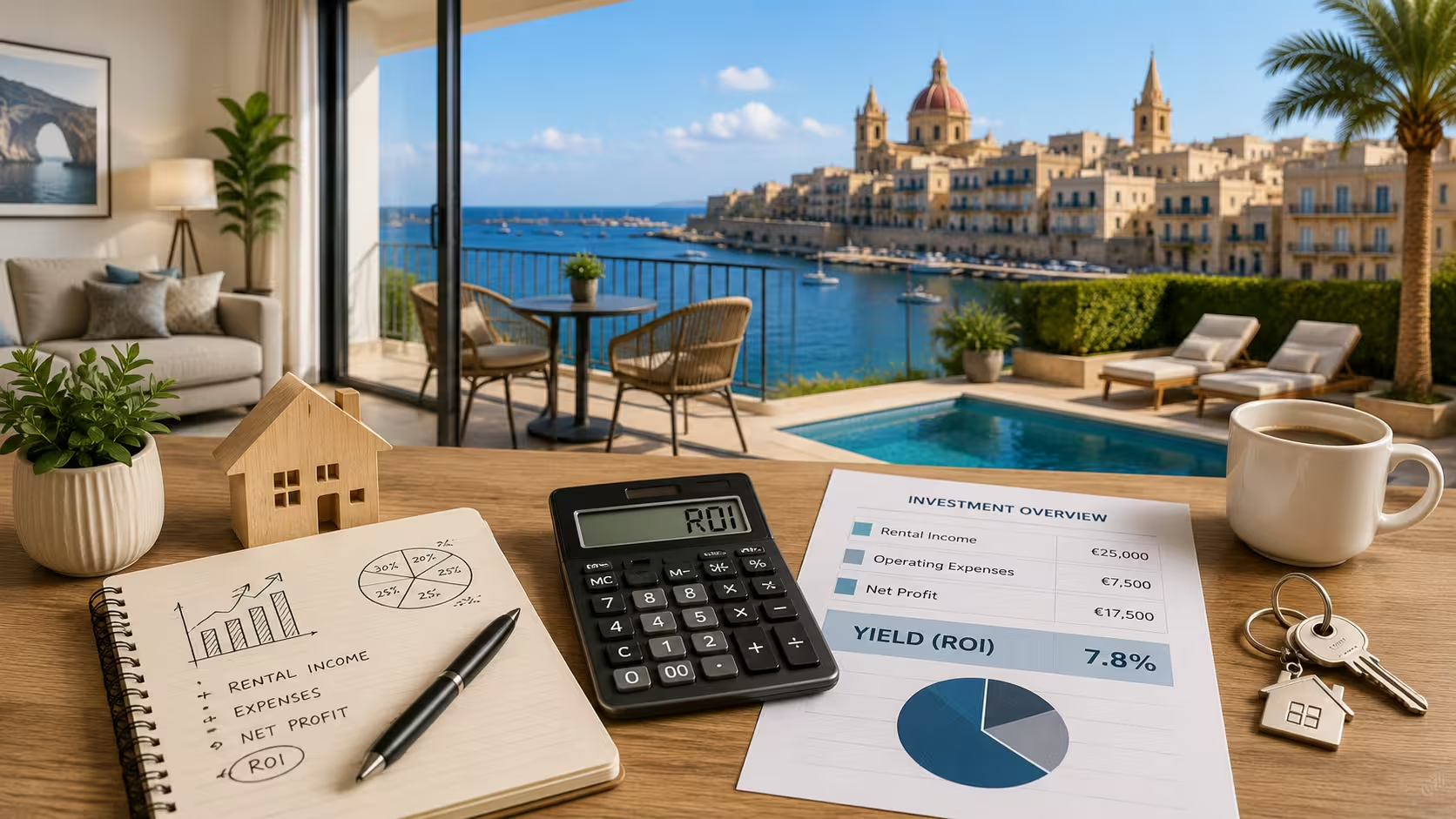
Most Malta property investment discussions focus on gross rental yield — annual gross rental income divided by purchase price. For short-let properties, this number is almost always misleading. A property generating €36,000 gross per year on a €250,000 purchase looks like a 14.4% yield. But the net figure — what actually lands in your bank account — is significantly lower.
Understanding the full cost stack is essential before you commit to a short-let investment strategy in Malta.
Using a 1-bedroom Sliema apartment as a worked example:
Assumptions: 1-bedroom Sliema apartment, €155/night ADR, strong occupancy, professionally managed.
A net yield of 6–8% in a stable EU jurisdiction with strong tourism demand represents a genuinely attractive risk-adjusted return — significantly ahead of most European long-let markets.
Malta property prices have risen consistently over the past decade. Prime areas — Sliema, St. Julian’s, Valletta — have delivered 5–8% annual capital appreciation in recent years. For a short-let investor, total return combines rental yield plus capital growth.
A property purchased for €220,000 in Sliema that appreciates at 5% annually is worth approximately €281,000 after five years. Combined with net rental income of ~€87,000 over the same period, total return approaches €148,000 — a 67% return on invested capital before financing costs.
Our interactive revenue calculator lets you input property type, location, and occupancy assumptions to generate a personalised income estimate. Use the calculator to model different scenarios before purchasing — or to assess the revenue potential of a property you already own.
Contact Eleva for a free, no-obligation revenue audit before you make an investment decision.
Hospitality
Malta's short-let market is competitive. In Sliema alone there are over 800 active listings on Airbnb. Yet top-performing properties in the same building — same size, same view — significantly outperform poorly optimised ones. The difference almost always comes down to the same controllable factors.
Airbnb's own data shows listings with professional photography receive up to 40% more bookings. In a market where guests are comparing dozens of similar properties, your hero image is your first and most critical conversion point.
Good short-let photography includes: wide-angle shots showing the full room, natural light properly exposed, styled staging with fresh linen and cleared surfaces, and an exterior or view shot that establishes location context.
Most Airbnb hosts in Malta use generic titles like "Nice 1-bed apartment in Sliema". A well-optimised title communicates key selling points immediately:
"Seafront 1BR | Sliema Promenade | Rooftop Pool | 5★ Reviews"
Your description should lead with the guest's experience, not the property's features. Instead of "The apartment has a kitchen", write "Cook local market produce in your fully equipped kitchen, or step out to Sliema's best restaurants, two minutes' walk away."
Static pricing is the single biggest cause of preventable revenue loss in Malta's short-let market. Malta has pronounced seasonality: summer (June–September) commands significantly higher rates; winter months require competitive pricing to maintain occupancy.
Dynamic pricing tools adjust your nightly rate automatically based on: local demand and competitor pricing, day of week, lead time, and local events (Malta International Airshow, Isle of MTV, Carnival).
Owners using professional management with dynamic pricing in Malta typically achieve 15–25% higher annual revenue than those using static rates.
Airbnb's algorithm rewards hosts who respond quickly. A response rate above 95% and response time under one hour dramatically improves your listing's visibility in search results. For self-managing owners, this means being available around the clock — which is why many Malta owners transition to professional management as their portfolio grows.
Reviews are the most powerful trust signal on any OTA platform. Strategies to accelerate accumulation:
Listings with Instant Book enabled receive more bookings, particularly from last-minute bookers. Malta sees significant last-minute demand from European city-break travellers. Use Airbnb's guest requirements (verified ID, positive review history) rather than disabling Instant Book altogether.
An outdated calendar with unexplained gaps depresses your search ranking. Synchronise calendars across all platforms if you list on multiple OTAs.
Self-managing is viable for owners with one property who live locally and have significant time to invest. For owners with multiple units, non-residents, or those prioritising passive income, professional management consistently delivers better results.
Eleva Malta manages properties across Malta's highest-demand areas. Our average managed portfolio achieves market-leading occupancy. Book a free revenue audit to see what your property could achieve.

Investment
Malta combines year-round tourism demand, EU jurisdiction stability, a favourable 15% flat tax on rental income, and a genuinely undersupplied premium short-let market in prime locations. For international investors, the absence of capital gains tax on property held for more than three years adds further appeal.
But buying the right property — in the right location, with the right structure — requires navigating several Malta-specific considerations that don’t apply in other markets.
Not all Malta locations perform equally on short-let platforms. Highest-performing areas for professional short-let investment:
This is the step most investors overlook — and the most expensive mistake to make. Before exchanging contracts on any Malta property intended for short-let, confirm:
Before your property can generate income:
Budget approximately €10,000–€18,000 in setup costs beyond the property purchase itself.
Use our revenue calculator to model income projections for the specific property type and location you’re considering. Factor in the full cost stack (management fees, OTA fees, income tax, insurance, maintenance) to arrive at a realistic net yield figure.
As a benchmark: professionally managed properties in Sliema and St. Julian’s typically deliver net yields of 5.5–8% on acquisition cost, depending on purchase price, property type, and occupancy performance.
Having a management partner in place before you complete the purchase means your property can be generating income within days of completion. Eleva can:
Contact Eleva before you make an offer — we’ll give you an honest revenue projection and flag any red flags in the property’s short-let viability.
Investment
Location is the single most important variable in Malta short-let investment success. The difference between the best and worst-performing areas can be as large as 40% in annual revenue — even for identical property types. This analysis draws on real market data to help you make an informed decision.
We assess each area across four dimensions: average daily rate (ADR), occupancy rate, annual gross revenue potential, and market competition. No single metric tells the full story — a high ADR area with low occupancy can underperform a moderate ADR area with consistent year-round demand.
Occupancy: 85% average | ADR: €132–€195 | Annual gross (1-bed): €35,000–€45,000
Malta’s UNESCO World Heritage capital generates the strongest average daily rates on the island. The combination of cultural tourism, limited short-let supply (633 active listings), and international visitor demand drives consistently high performance.
Best property types: Character apartments, converted palazzo flats, and townhouses. Properties with rooftop terraces or harbour views command a significant premium.
Key consideration: Entry prices in Valletta are the highest in Malta. Typical 1-bedroom apartments sell for €250,000–€400,000+, which affects the yield calculation.
Occupancy: 78–82% | ADR: €120–€175 | Annual gross (2-bed): €28,000–€42,000
Sliema is Malta’s most liquid short-let market with 1,161 active listings and strong year-round demand from business travellers, returning tourists, and digital nomads. It offers the best balance of consistent occupancy and competitive ADR.
The top quartile of Sliema hosts earns €194+ per night — demonstrating that premium positioning within a competitive market is achievable. Properties with sea views, pools, or premium interior design consistently outperform the area average.
Occupancy: 80–87% | ADR: €120–€145 | Annual gross (1-bed): €30,000–€38,000
St. Julian’s delivers the most consistent occupancy of any area in Malta — often above 80% year-round. This is driven by its position as Malta’s entertainment hub, proximity to the gaming industry, and strong demand from younger travellers.
Key consideration: Properties slightly removed from Paceville tend to score better on guest noise reviews.
Occupancy: 55–75% (highly seasonal) | ADR: €150–€400+ | Annual gross (farmhouse): €20,000–€60,000+
Gozo is a completely different investment thesis. Summer (June–September) delivers exceptional performance — farmhouses and character villas regularly command €300–€500 per night. But November to February sees sharp occupancy drops, requiring a different pricing and marketing strategy.
Best property types: Traditional farmhouses, character villas with pools, rural retreats. Modern apartments perform significantly below the Gozo average.
Gzira, immediately adjacent to Sliema, is attracting growing attention from digital nomads and remote workers. Lower property prices than Sliema — often 20–30% cheaper per square metre — combined with a walkable waterfront make it a compelling buy-to-let opportunity for investors with a 3–5 year horizon.
No. Eleva manages properties entirely on behalf of overseas owners. From MTA licence application to monthly payout reports, the entire operation runs without owner involvement. Many of our clients have never visited Malta.
Beyond the purchase price and stamp duty (5% in Malta), you need to budget for furnishing, MTA licence (€130 per unit in Malta, €104 in Gozo), professional photography, and any compliance works identified during the MTA inspection.
With the MTA licence in place, Eleva can have a new property listed and generating bookings within 7–14 days of being furnished and photographed.